

Quick Answer
- While Google has not yet announced a formal list of startups participating in the Market Access Program, the company has consistently worked with Indian startups through accelerator programs and other initiatives.
- This is where Google steps in with its newly launched Market Access Program for India, an initiative aimed at helping AI-focused startups move beyond the trial phases, unlock enterprise customers, and scale internationally.
- Over the years, Google has supported founders via programs such as Google for Startups Accelerator and AI-first cohorts, offering a mix of technical mentorship, cloud infrastructure support, and access to its AI stack.
As Indian startups continue to build increasingly capable AI products, one challenge keeps coming up repeatedly: going from a strong product to a globally viable business. It’s a gap that sits somewhere between technology readiness and real market adoption, especially when startups try to sell to large enterprises outside India.
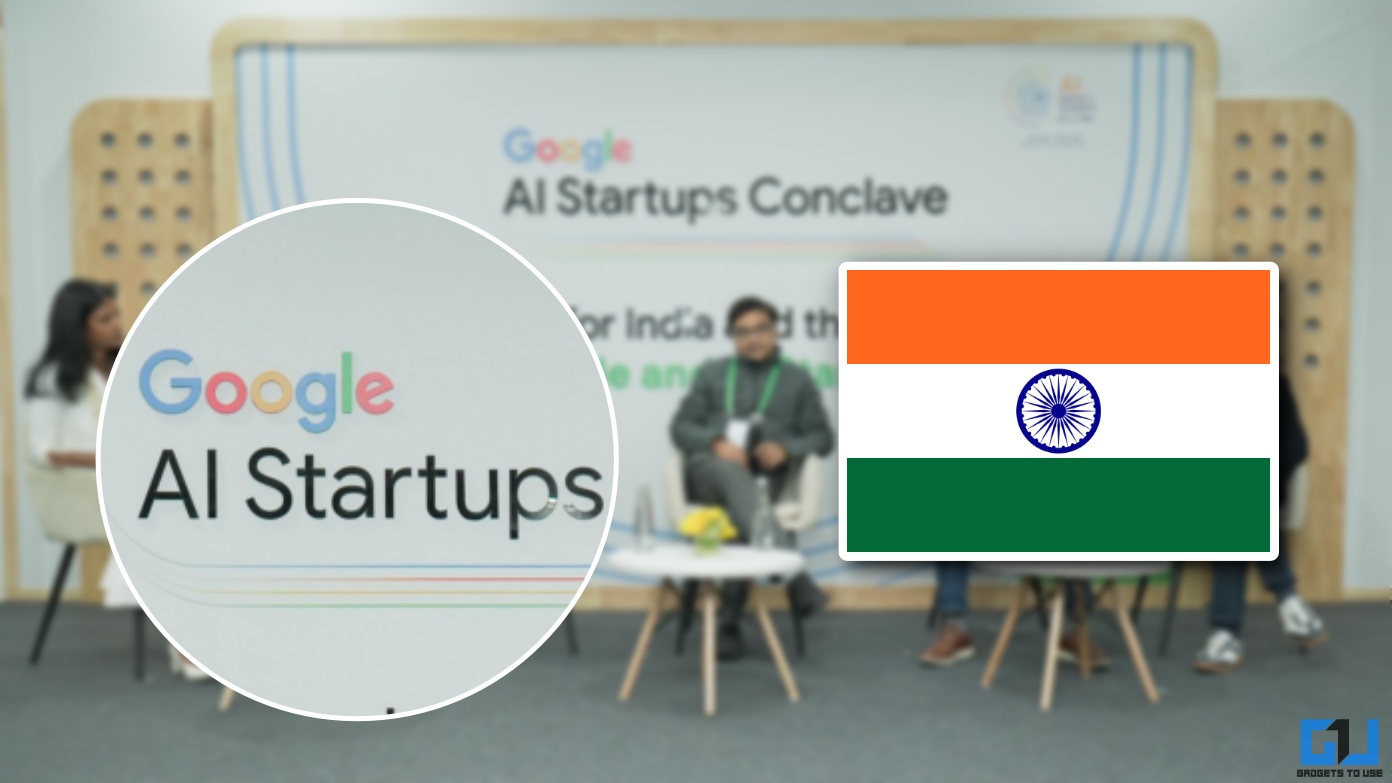
This is where Google steps in with its newly launched Market Access Program for India, an initiative aimed at helping AI-focused startups move beyond the trial phases, unlock enterprise customers, and scale internationally. Unlike growth programs that focus heavily on product building or investment funding, Google’s approach here is far more commercial, and that’s what makes it interesting. Let’s have a look.
What is Google’s Market Access Program?
Google’s Market Access Program is designed in partnership with two government-backed startup agencies: MeitY Startup Hub and Startup India. It aims to specifically help AI-first Indian startups that already have a working product and are now looking to expand their reach, both within India and globally. The core idea is simple: help startups understand how global enterprises buy technology, and help them prepare for that reality.
Rather than focusing on R&D or early-stage experimentation, the program works with startups that are past the prototype phase. These companies typically have customers, use cases, and technical validation, but may struggle to scale it up. Typical problems include update cycles, pricing strategies, compliance expectations, or global distribution.
Another important aspect of the program is its global outlook. While India remains a key market, the intent is to help startups position themselves for customers in regions where enterprise AI adoption is accelerating. This includes markets like North America, Europe, and Southeast Asia.
Why This Program Matters for Indian Startups
India’s AI startup ecosystem has matured rapidly over the past few years. There is no shortage of technical talent or innovative use cases. What’s often missing, however, is structured support around selling AI at scale, especially to large organisations that expect reliability, security, and long-term commitment.
Google’s Market Access Program attempts to bridge this exact gap in the following ways:
- Enterprise go-to-market support: Startups receive guidance on how to sell to large organisations, including deal structuring, long sales cycles, procurement processes, and stakeholder management.
- Access to Google’s AI infrastructure: Participating startups can leverage Google’s AI models, cloud infrastructure, and tools to build reliable and production-ready solutions
- Exposure to global customers: Through curated networking opportunities, startups get visibility with international CIOs, CXOs, and decision-makers who are actively exploring AI solutions.
- Improved credibility: Being associated with Google adds a layer of trust, which can be critical when startups approach large global clients for the first time.
Indian Companies Associated With Google’s Startup Ecosystem
While Google has not yet announced a formal list of startups participating in the Market Access Program, the company has consistently worked with Indian startups through accelerator programs and other initiatives. Over the years, Google has supported founders via programs such as Google for Startups Accelerator and AI-first cohorts, offering a mix of technical mentorship, cloud infrastructure support, and access to its AI stack. These efforts, while not identical to the new Market Access Program, provide a clear indication of the kind of companies Google typically engages with.
Startups backed through these initiatives are from sectors like healthcare, enterprise SaaS, generative AI, data intelligence, and more. Some popular examples include companies like Nawgati, a platform that helps people find CNG stations with less crowd.
Another example is BigOHealth, which connects patients with top-grade medical facilities across India. Both companies have benefited from Google-led mentorship and technical support in their early days. Google has also helped India-based generative AI players like NeuralGarage, a company that builds ultra-high quality audio-visual foundation models, and Predis.ai, which helps businesses create engaging ads using AI.
How Indian Startups Can Sign Up
Startups interested in joining the Google Market Access Program need to meet a few basic criteria. First, the company should be AI-first, with a product that is already in use or close to commercial deployment. Early-stage ideas or research-only projects are unlikely to get approved, as per the details shared by the company during the event.
1. Open the registration page of the Google Market Access Program.
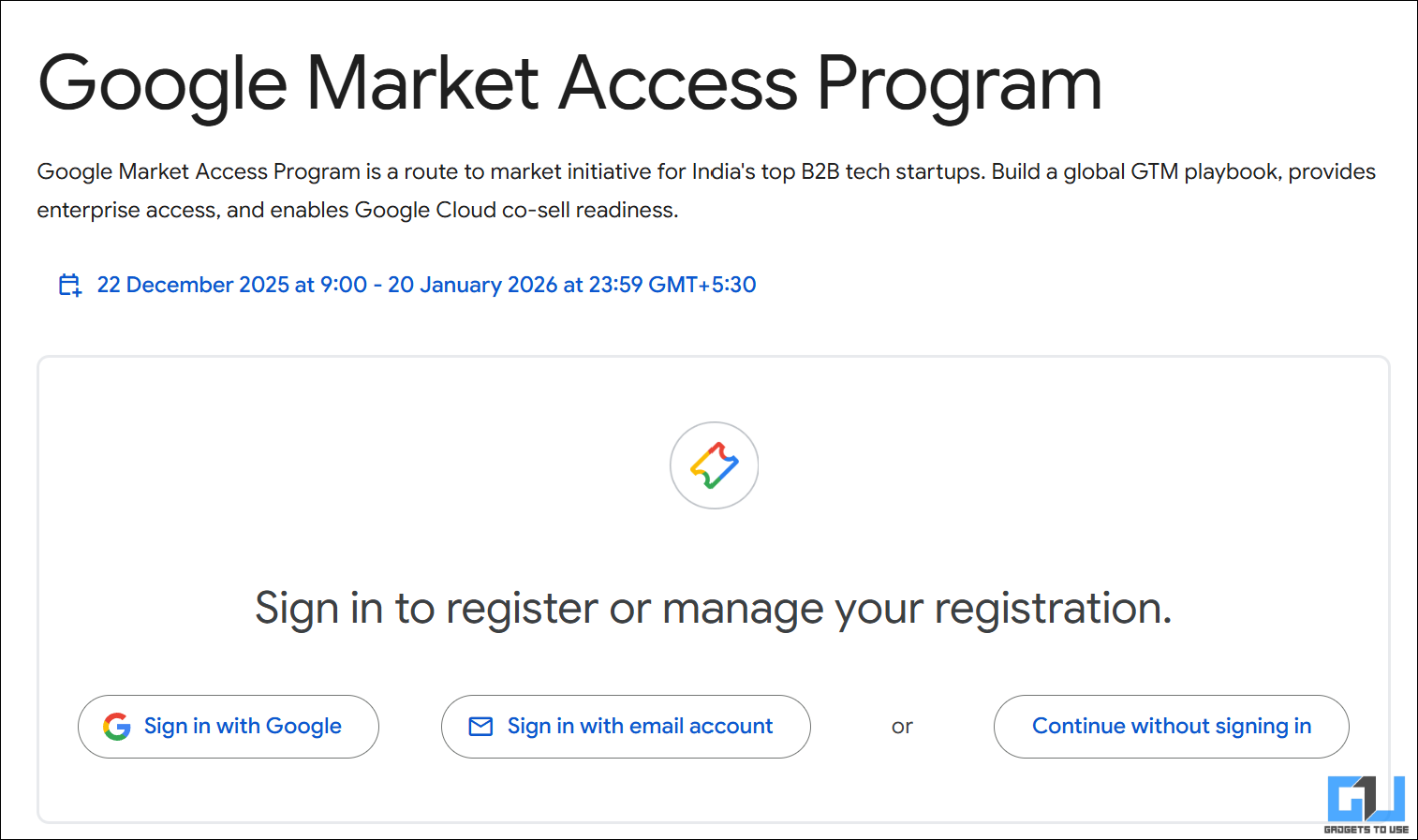
2. Click on apply, and sign in using your Google or company email account.
3. Provide the necessary details of your startup, and add attachments as required.
Note: Last date top register is January 20, 2026.
These applications are reviewed by Google’s internal teams, and selected startups are invited to join the program directly. However, the company has not disclosed the exact selection criteria or other details involved the qualification.
Google Expands New AI Models For Medical and Support Applications
Alongside its Market Access Program, Google also expanded its open AI model ecosystem with two significant additions: MedGemma 1.5 and FunctionGemma. These models are part of Google’s broader Gemma family of models, which are designed for developers and help them build real-world AI solutions.
MedGemma 1.5 is a 4-billion-parameter multimodal model specially fine-tuned for healthcare and medical AI applications. It builds on earlier MedGemma releases by enabling developers to work with complex medical imaging modalities such as CT and MRI volumes, whole-slide pathology images, longitudinal X-ray analysis, and text-based medical records. The model is positioned as a foundational tool for startups innovating in clinical workflows, diagnostic assistance, and health data interpretation, and its primary aim is to make healthcare more affordable.
Similar to this is FunctionGemma, a lightweight, function-calling-optimised variant tuned for building on-device AI. Rather than just generating text, FunctionGemma is designed to translate natural language commands into executable actions. The best example of this is that developers can use this model to execute operations locally on a person’s device while offering customer support in a secure environment.
FAQs
Q. What is the difference between Google Market Access Program and Accelerator Program?
The Google Accelerator Program helps startups that are in the prototype or trials phase, helping them to bring their ideas to reality. Whereas the Google Market Access Program aims to grow AI startups that already have a product or service deployed at a small scale.
Q. Are there any charges to enrol in Google Market Access Program?
Currently, there are no charges to enrol and register in the Google Market Access Program. However, Google may hold an equity stake or some other financial deal if your startup qualifies and gets selected.
Wrapping Up
With the Market Access Program, Google is addressing one of the most common gaps in India’s AI startup journey: the transition from capable technology to global enterprise adoption. By focusing on enterprise exposure and practical scaling support, the initiative can help startups grow faster and compete in the global markets. This coulkd be a strong push for some startups that have demand in foreign markets, but lack the resources to supply their service overseas.
You may also like to read:
- We Tested 6 New AI Features in Google Photos
- Beyond the Demos: What Google I/O 2025 Really Tells Us About the Future of Tech
- First Leaks of Samsung Galaxy S26 Ultra Make It Worth Waiting
- How I Translate Videos in Any Language Using Gemini